Stop water pooling
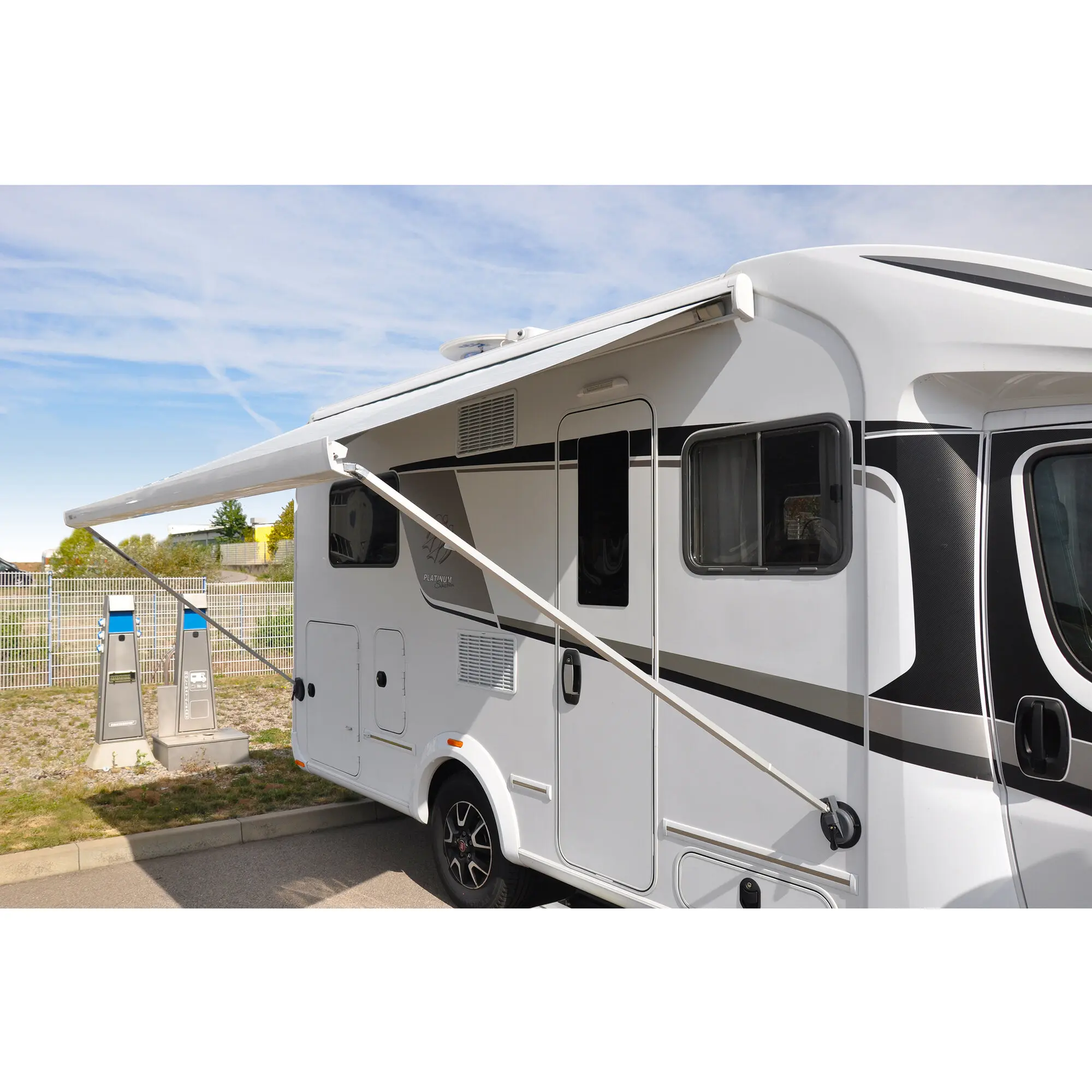
A water pocket becomes very heavy. Keep the fabric tensioned and use a suitable tension or curved rafter if your awning model supports one.

Before the weather turns
Wind-out awnings are mainly designed for shade and lighter weather. In strong wind, heavy rain, hail or snow, the safest option is to retract the awning.
Rain set-up
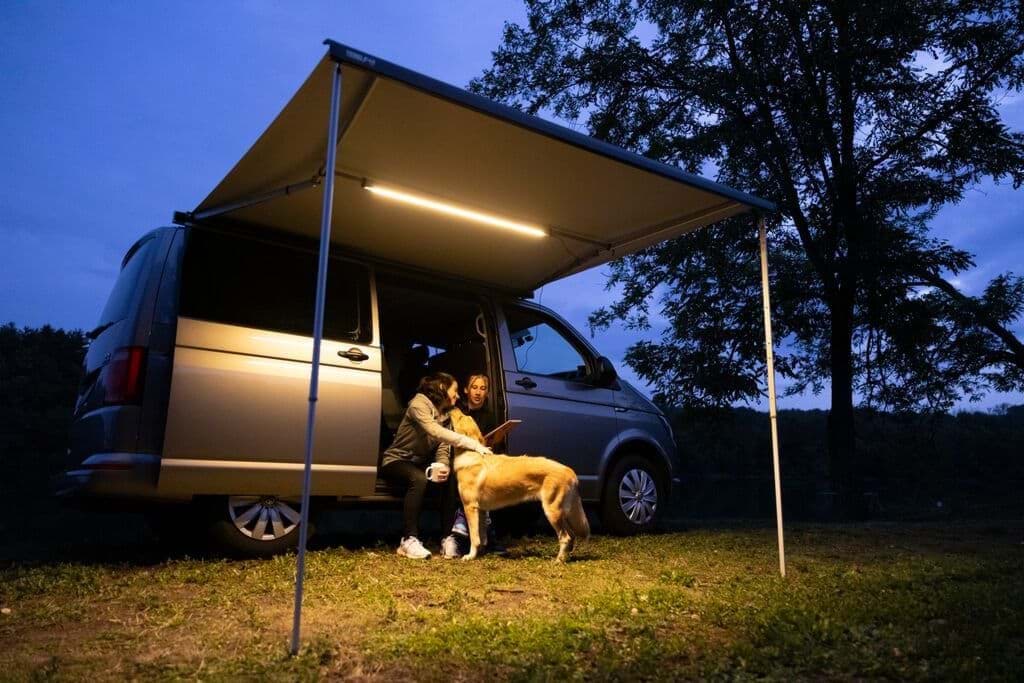
In moderate rain, lower one support leg so one side of the awning is clearly lower than the other. This creates a proper fall and allows water to run off instead of forming a heavy pocket in the canopy.
Choose the lower corner carefully: direct the water away from the doorway, chairs and electrical equipment.
A water pocket becomes very heavy. Keep the fabric tensioned and use a suitable tension or curved rafter if your awning model supports one.
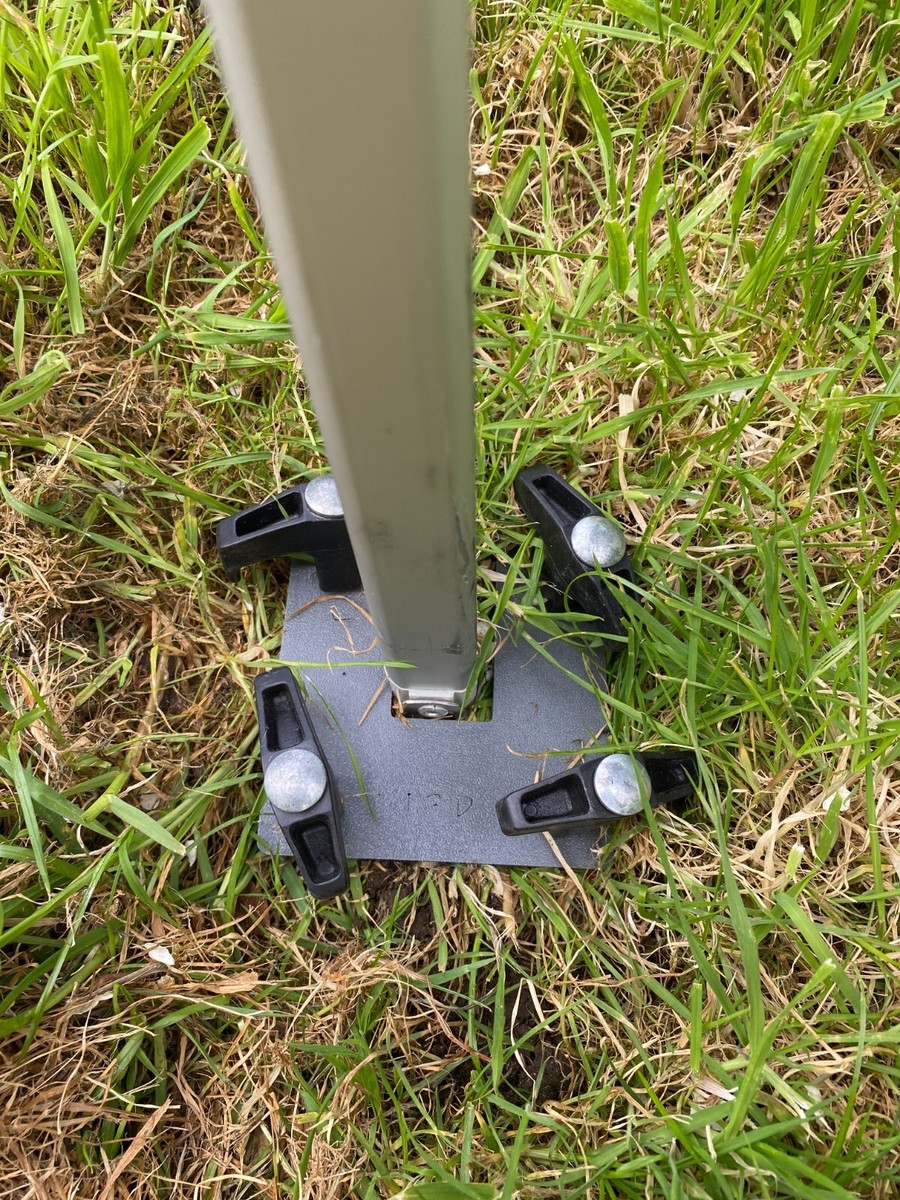
Do not rely on the weight of the awning. Secure support legs with the correct pegs or anchors for the ground conditions.
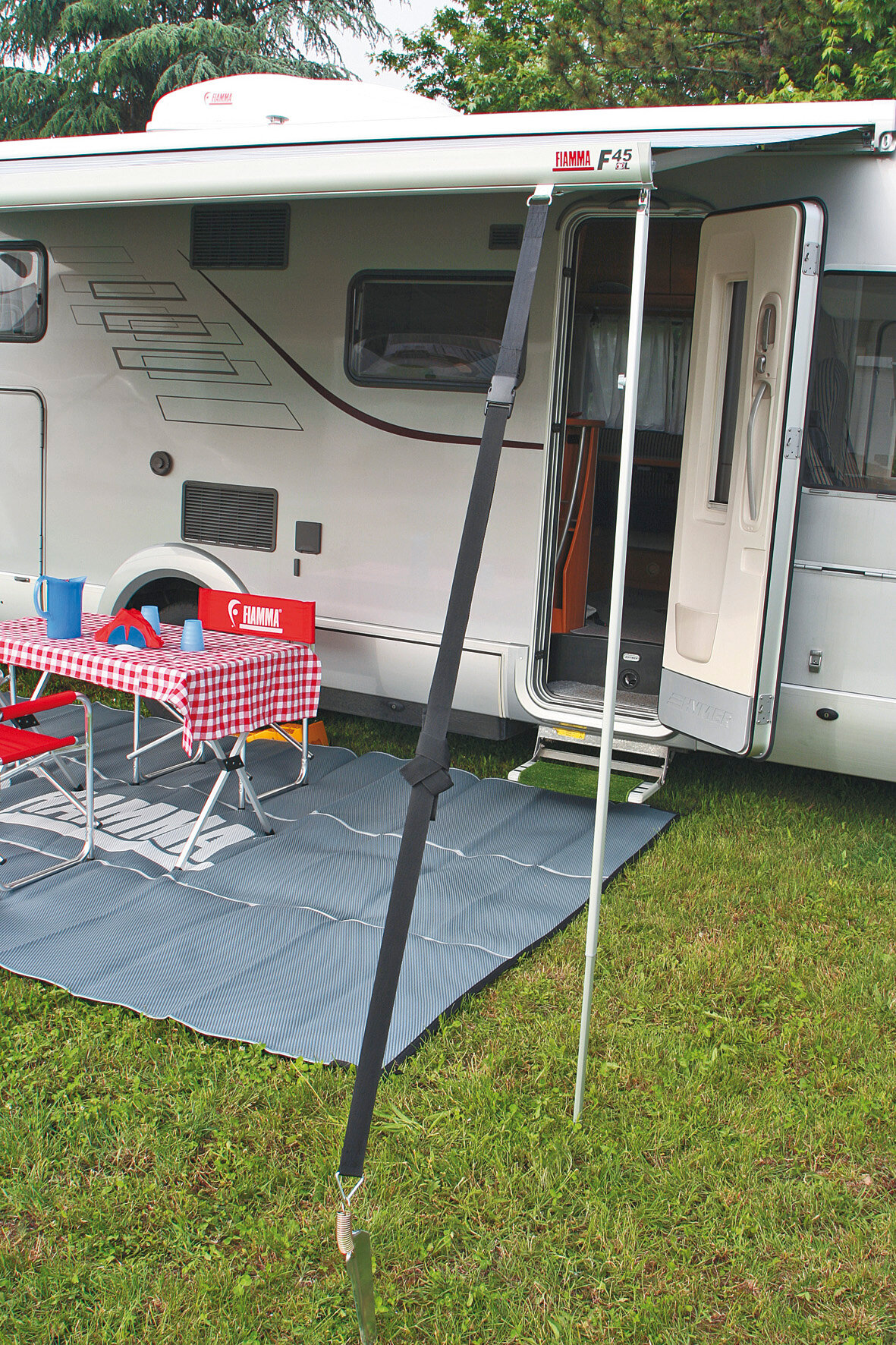
A compatible tie-down or hold-down kit adds stability. It helps control movement, but it does not make an awning storm-proof.
Heavy rain can create water pockets quickly, snow adds weight, and gusty wind can damage the canopy, arms, cassette or mounting points. No strap or peg makes a wind-out awning safe in severe weather.
Think about the forecast while you are asleep, not just the conditions at bedtime. If significant rain or wind is possible, retract the awning before bed.
Going walking or sightseeing for several hours means the awning could be unattended if the weather changes. Wind it away before you leave.
Retracting it wet temporarily is safer than leaving it exposed. Reopen it when conditions allow and dry the canopy thoroughly before longer-term storage.
Check that nothing is trapped, the canopy has rolled evenly into the cassette and the awning is fully and correctly closed before moving the vehicle.
Keep it easy to reach
Carry the correct pegs or anchors, a compatible hold-down kit, an approved tension rafter where appropriate, and keep the winding handle immediately accessible.

Avoiding damage to the awning, its mounting points, your vehicle and people nearby matters far more than keeping the canopy out.